

The Badger Face Texel is predominantly a carcass breed but just as any other member of the Texel family, it is ideal for both Terminal and Maternal Sire production.
Head and Neck
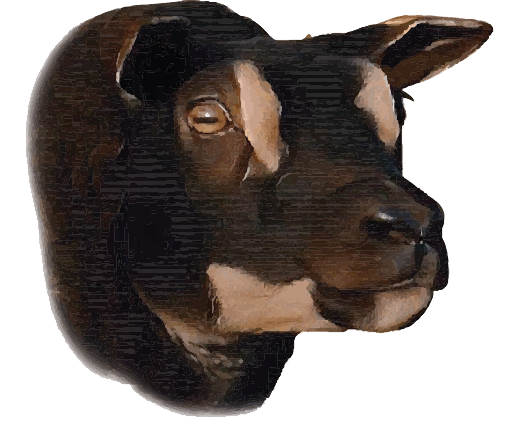
A Badger Face Texel has a strong, distinctive skull with bright, clear eyes. The head needs to be as dark as possible, although hues of blue and brown are permissible. There should be two vertical eyebrow style markings on the inside of both eyes, which should be cream in colour. The underside of the lower jaw should be cream; this can be a solid mark or split into two sections. The markings can run to the throat but should not be blotchy or mottled in appearance. The bottom lip should be solid black or have a cream mark in the centre. Ears should have a cream edging around the outside.
Body
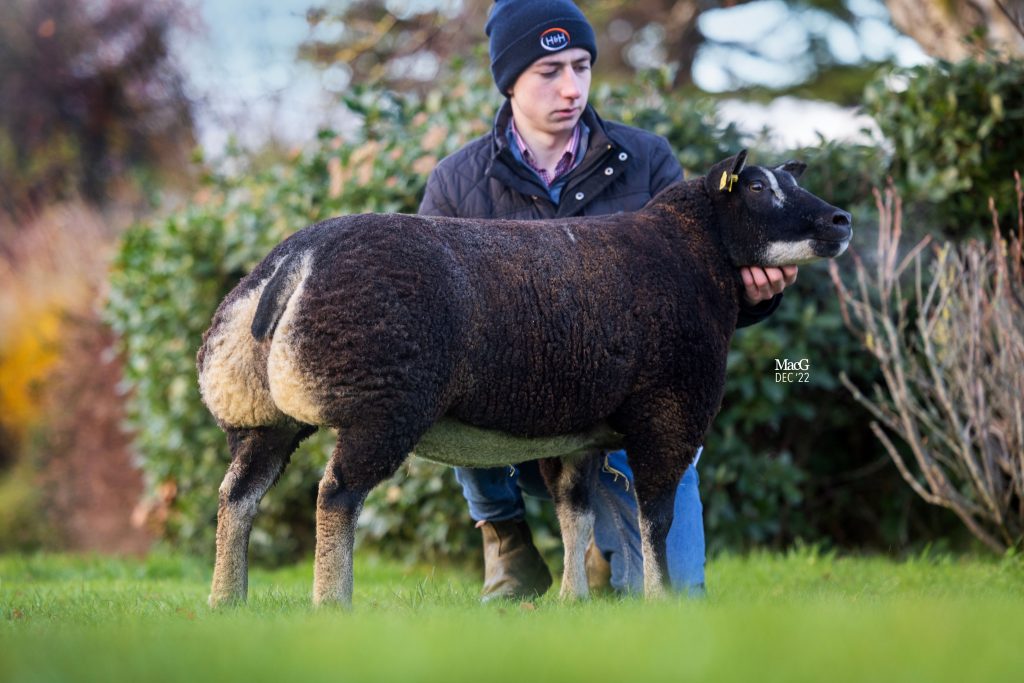
The main body colour varies from dark black, brown, and shades of blue or silver. It is known to become lighter in colour with age. The second predominant colour within the breed is cream which gives the breed its distinguishable markings.
The back should be strong and level, with width and length being the objective. Loins should be as deep and wide as possible.
Shoulders should be well muscled, flat on top and no wider than the rib cage, which must be deep and well sprung.
Quarters and Gigots
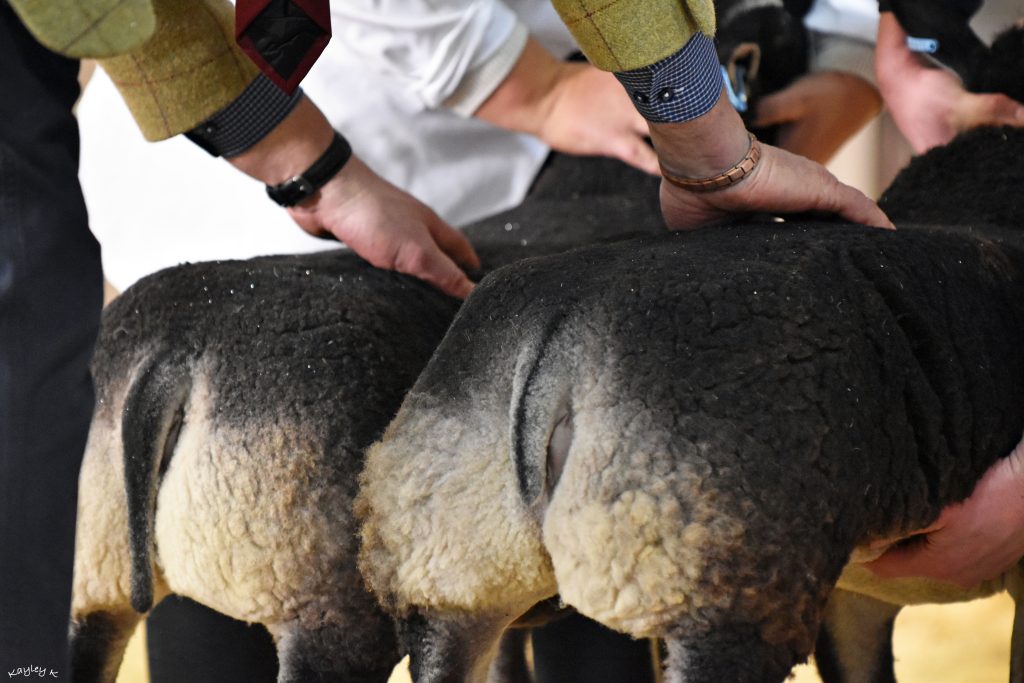
These should be well rounded and full of meat, double-muscled hindquarters with a prominent gigot. The forequarters should be broad and deep. Hindquarters need to be as wide as possible to aid the birth process and the reputation the breed has for its easy lambing capabilities.
Belly
The sheep should be cream from the breast and run underneath the carcass to the inside of the back legs. This cream marking should NOT run through the body of the sheep and up towards and over the ribs.
Front Legs
These should be cream from the hoof wall up to the knee and dark coloured from the knee upwards. However, on the back of the front legs, the cream marking can continue from the hoof wall to elbow.
Hind Legs
Should be cream from the hoof wall to the hock joint, this can continue up on the inside of the leg. Back legs should be well sprung from the hock, set well apart. There should be good definition of hock; not over bent or too straight.
Straight, balanced legs are most desirable; neither too close nor too wide apart. Bone should neither be too fine or too heavy. The sheep should have a square and straight stance, legs should neither deviate inwards or outwards. They should be clean and well-proportioned to the body; joints should be straight to enable soundness of movement and good balanced mobility.
Pasterns
Pasterns need to be relatively short, fairy upright and angulated correctly.
Feet
Feet should be compact, deep with hard hoof horn and preferably black. Long flat feet should be avoided.
Tail
This should be the same colour as the body of the sheep, there should be cream markings running up the inside of both gigots and finishing at the tail head.
Fleece
The breed should have a good quality, lustrous fleece which should be dense and tightly stapled but not too long nor open. It should be complete over the body without breaks but not extending down the legs or over the head.
Any sheep which do not adhere to the physical Breed Standard should not be entered into the flock book. The only exception which will be made is for colour and markings. Sheep which are not correctly marked or are a Registered member of the Texel Family (Beltex, Blue Texel, Dutch Texel & Texel) can be entered into the sub-register. However, these sheep must be structurally correct in all the above sections. If resulting offspring from sheep registered in the sub-register are correctly marked, these can then be entered into the main flock register.